

Bay Area cities face increasing challenges as they work to create resilient communities and build an economy where everyone can prosper. Local governments have ambitious goals to build enough affordable housing and preserve reliable public transportation networks. They are preparing for emergencies while also mitigating climate risk. But the systems that cities have built over time to plan, finance, budget, and purchase public goods and services were designed for a different era. As income disparities widen and revenue sources become less predictable, Washington is pushing more of the cost and responsibility for healthcare, infrastructure, and disaster response onto local governments — at the exact moment these costs themselves are climbing. This reality demands that cities find ways to serve residents better and more nimbly. But achieving these goals will require something that doesn’t come easily to any institution, public or private: the ability to adapt and change to meet the moment. Cities must be willing to abandon approaches that no longer work and take measured risks on those that might.
The Pressure for Systems Change Is Rising
With the federal government retreating from its role in supporting local communities — pulling back on disaster funding, infrastructure investment, and safety-net programs — cities are left to fill widening gaps with shrinking resources. At the same time, structural budget deficits are growing. Revenues are not keeping pace with the cost of delivering services.
Pension obligations continue to mount. Years of deferred maintenance on parks, roads, transit systems, and public buildings are now impossible to ignore, and people are weary of ever-growing tax obligations as their personal costs also continue to rise exponentially. This new reality has cities like Oakland and San Francisco looking to update their governance structures. Measures on the ballot this November, if passed, will set both cities up for significant change. However, the success of these measures will be determined by how thoughtfully the change is managed and how well the new structures are implemented. The good news is that cities in the Bay Area have adapted their systems before. For every headline about what didn’t work or didn’t get done, there are dozens of less visible stories about successful change that we can learn from. Often, these new practices are absorbed into the fabric of how a city operates, and we forget that they were ever hard to begin with.
Promising Practices to Jumpstart Change
Looking across recent projects where Bay Area cities successfully navigated change, some patterns begin to emerge. While disruption often catalyzes change, bringing intentionality, authority, and vision to bear can channel crisis into future opportunity.
1. Make use of disruption as an opportunity for change.
The pandemic forced the City and County of San Francisco to temporarily reconfigure its entire transit system. That disruption created space for Muni to experiment with reliability improvements, transit-only lanes, and new maintenance schedules — all of which would have faced resistance in normal times. Similarly, when an Americans with Disabilities Act lawsuit made it clear that current processes and rules were blocking 20-year ADA curb-ramp and sidewalk-repair goals, the City of Oakland streamlined its contracting processes. Leaders who recognize a disruption as an opportunity and build from it can accomplish in months what might otherwise take a decade.
2. Start with a clear vision backed by executive sponsorship.
A vision clarifies the direction of change, simplifies decisions, and motivates people to act. A successful vision is backed by leaders with the political will to carry it out, and the authority to clear the deck and provide cover, in a public sector culture where mistakes can trigger lawsuits, audits, and front-page stories. The City of San José uses Council Policy Priority Setting to clarify its vision each year. Established in 2011, this process allows the city council to manage limited staff resources under fiscal constraints by determining its priorities for completion in the year ahead. These priorities allow the council to track outcomes and give clear guidance to staff about where to focus their time and attention.
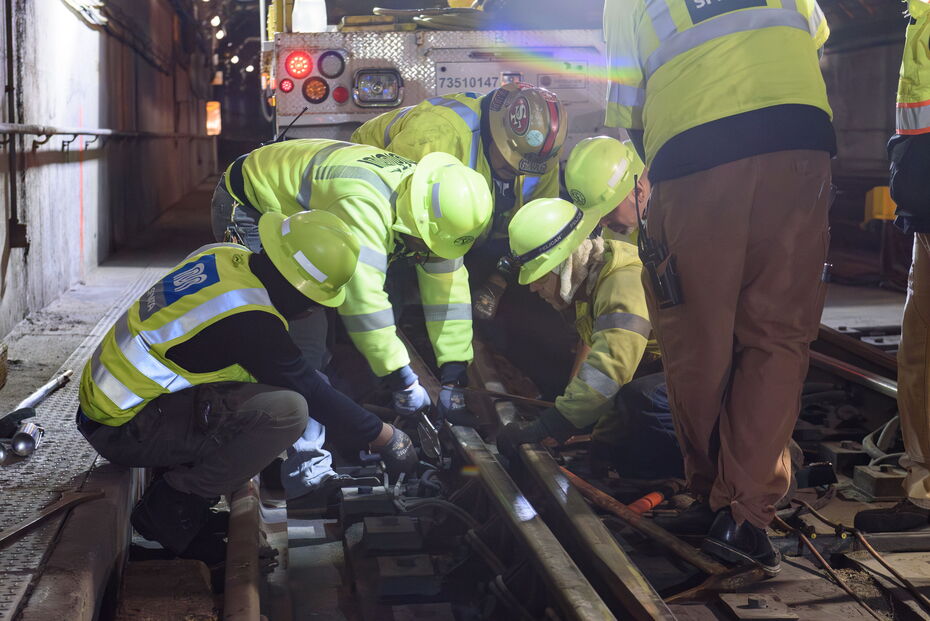
During Muni Fix It! Weeks, early closures allow crews to perform heavy repairs, deep cleaning, and infrastructure upgrades. Photo: Jeremy Menzies, SFMTA Photographer
3. Start small, show outcomes, then continuously improve.
The most reliable way to overcome institutional resistance to change is not to win a policy argument; it’s to produce results that people can see and feel. When San Francisco’s Department of Public Health introduced open-access scheduling and patient self-service tools in a single clinic, the data it generated was harder to argue with than any theoretical case could have been. When Muni created “Fix It! Week” and started scheduling subway shut downs for maintenance once a quarter, commuters’ positive responses proved the concept in a way that no internal memo could. Quick wins build morale and motivation, generate data to fine-tune ideas, and persuade doubters.
4. Use data as a flashlight, not a spotlight.
The goal of measurement in a change process is not to hold people accountable for falling short of targets; it’s to ask better questions. The right amount of data is the amount that prompts an excellent management question and allows for more thoughtful analysis with those that operate and use the systems. Before 2000, San Francisco’s parks were in serious disrepair. That year, voters passed a $110 million general obligation bond to fix them, but mismanaged expectations and poor stakeholder engagement left the public skeptical. Before issuing the 2008 bond, the SF Recreation and Parks Department tried something different. It assessed every facility and built a data-driven prioritization system to rank parks not by political connections or the number of complaints, but by a facility condition index that weighed repair costs against replacement costs. It engaged stakeholders to build consensus on policy priorities, and it built accountability mechanisms directly into the bond structure. After the city successfully demonstrated results, voters approved additional bonds.
Cities must be willing to abandon approaches that no longer work and take measured risks on those that might.
5. Embrace conflict as a constant, not a failure.
Large-scale change in government doesn’t have a clear beginning, middle, and end. It is a multi-party negotiation that reaches an impermanent consensus. Stakeholder processes go sour not when people disagree, but when new proposals stop being generated. The job is to keep bringing new ideas to the table, implement them, and regularly gauge success. The City of San José went through years of negotiations, ballot measures, and litigation to successfully reform its pension system. While other cities are still grappling with the full weight of legacy pension obligations, San José is now operating with greater fiscal flexibility — the kind of change that makes everything else possible.
6. Embed equity in government operations.
Abstract equity frameworks make it difficult to generate buy-in. The ones that work embed an understanding of community members’ lived experiences into all municipal operations, policies, and contracts. Oakland’s Capital Improvement Program centers community values and priorities in the allocation of capital dollars. The program weighs the urgency and expected impact of projects to ensure effective allocation of city dollars and prioritizes investments that address historical disparities in underserved, historically redlined neighborhoods. The result has led to direct investments in recreation centers and public facilities such as Lincoln Square Park — designed with the communities that use them — to improve accessibility, safety, and community well-being. (Read more on page 27.)
7. Celebrate wins and tell the story.
Governments often underinvest in communications, relying on conventional tools like press releases to get their messages across. In this scenario, political credit becomes the dominant narrative of how things get done, and the stories of long-haul institutional change, driven by dedicated public servants over years, simply don’t get told. But stories of how change happens should be shared — not just because they’re good for morale, but because they help local governments learn how to do it again.
Systems Change Advances Local Resilience
The path to local resilience runs directly through the unglamorous work of systems change. It cannot be accomplished by any single innovation office, an outside consulting team, or even AI. It must be championed by the people who already work within government, given the intentionality, resources, organizational structures, and permission to work in a new way. We know how to bring about this change. We have done it before. The task now is to do it at the scale and speed the moment demands.
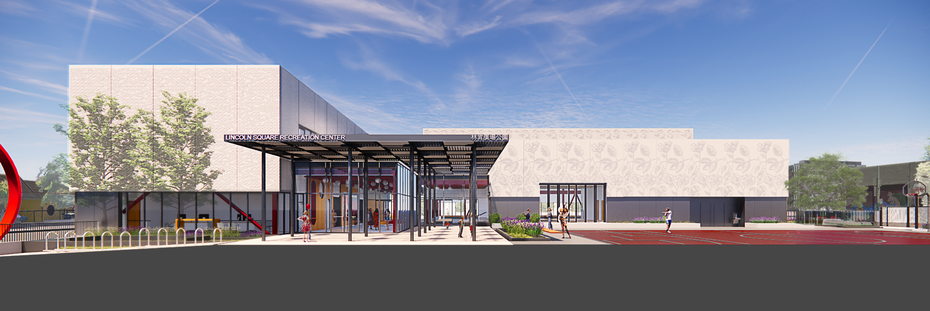
Oakland’s Capital Improvement n Program works closely with com-in munities in historically underserved in neighborhoods to develop capital P investment projects. The program has al invested in rebuilding Lincoln Square cl Park as a recreation center that will also serve as a resilience hub during climate emergencies.
Photo: Shah Kawasaki Architects, City of Oakland