In 2018 The New York Times published the story of a handful of American scientists, activists, and politicians who, from 1979 to 1989, tried tenaciously to raise the alarm about our rapidly warming planet and spur global leaders to do something about it. They fully understood the risks of a rising global temperature, and they knew how to solve it.
This was a story about reckoning with regret. The authors ask pointedly: “Is it a comfort or a curse, the knowledge that we could have avoided all this?” In the face of a massive challenge, who will we choose to be? How will we show up in our hardest moments?
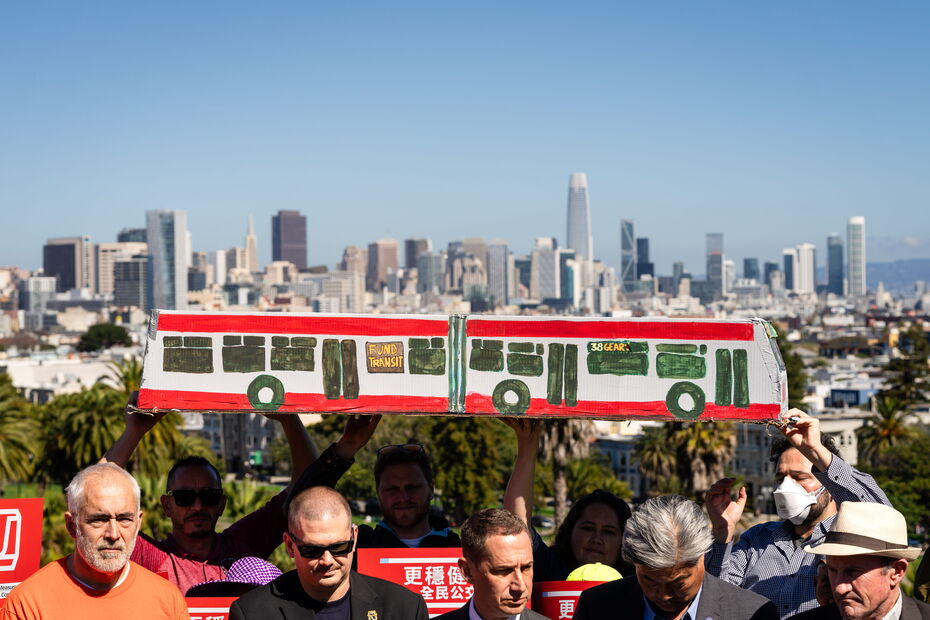
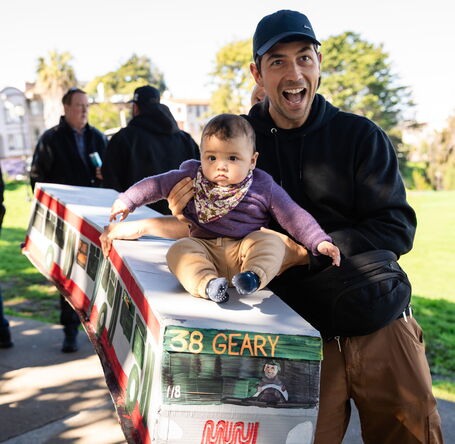
The Bay Area is getting dangerously close to losing our largest transit systems. Muni, BART, and Caltrain are headed towards a fiscal cliff, but it is utterly avoidable. The election this November is the last chance to avert catastrophe. Already, more than 1,000 people have chosen to live by their values and volunteer for the campaigns to save transit.
To understand the roots of the ridership and funding crisis, we have to turn back the clock to March 2020. The COVID-19 shut-downs enabled many people to work from home, and hybrid work appears here to stay. Today, more people are riding transit than ever for a variety of trips (not just for work), but commuters are riding less frequently than before the pandemic, so the overall volume of trips and fare revenues are lower than they were pre-pandemic. At the same time, other sources of revenue have taken a hit while inflation continues to drive up the costs of operating buses and trains. One-time relief funding from the state and federal governments has helped backfill lost revenues, but that assistance ends this year. Although transit agencies are taking steps to reduce and manage costs, they’ll still need new revenue to avoid service cuts starting in January 2027. Those potential cuts will strand tens of thousands of Bay Area residents who rely on transit to get to work, school, and healthcare regularly, as well as casual riders who simply want to avoid heavy traffic on the way to a game.
Two Ballot Measures Hold Out a Transit Lifeline
Two ballot measures give voters an opportunity to shore up transit. One is a 14-year regional transit measure that increases the sales tax by 1 cent in San Francisco and by ½ cent in Alameda, Contra Costa, Santa Clara, and San Mateo counties. The measure would provide critical funding support to BART, Muni, Caltrain, and AC Transit, which are contemplating severe service cuts through reduced hours and frequencies, route and station eliminations, and weekend service suspensions. The second measure, Stronger Muni for All, is a parcel tax for Muni. Both the regional sales tax and the local parcel tax measures must pass at the ballot in November 2026 for Muni to continue operating San Francisco’s high-quality, connected, and frequent bus, rail, and paratransit service.
Both of these measures are initiative measures, meaning they are placed on the ballot by voters — an inherent form of local resilience. The federal government won’t provide ongoing operating funding to prevent drastic service cuts anytime soon, nor will the state government, which provided relief funding only to take it back. The Bay Area has to save itself.
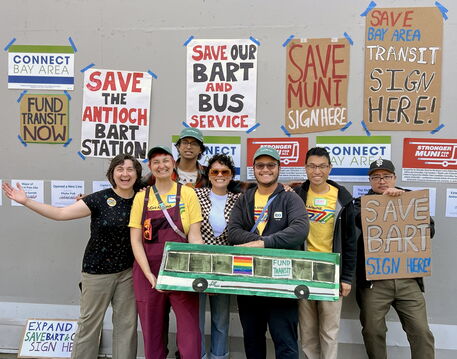
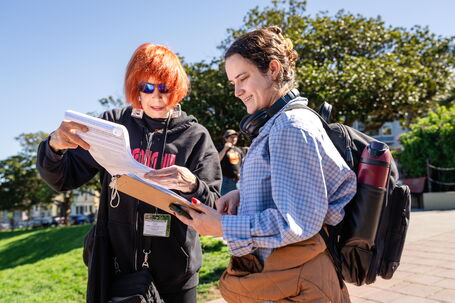
There’s a strong indication that residents understand the stakes. Connect Bay Area needed 186,000 valid signatures to qualify the sales tax measure for the ballot. With the help of more than 1,000 enthusiastic transit advocates and volunteer signature gatherers, it submitted 305,000 signatures at the end of May.
This mobilization represented the largest grassroots transit advocacy effort in the Bay Area in decades, perhaps ever. The volunteer signature gathers and signatories recognized that the collapse of transit is entirely avoidable and took it upon themselves to act. Their effort is a testament to how important public transit is in people’s daily lives.
Three Volunteers Share Their Stories
Some of the people who contributed to the massive signature-gathering effort shared their reasons for stepping up. All found meaning and purpose by taking the future into their own hands.
 Anki Hagelin: Fear is a powerful motivator. And when I think about these service cuts, I feel very afraid. It’s easy to feel powerless. I’m not a legislator; I don’t have a degree in public policy. I’m not going to negotiate the terms of a parcel tax. But I can show up to an event and hold a sign [and gather signatures]. The most powerful part, to me, was encountering people who had already signed. They’d say, “I just signed this morning at El Cerrito Plaza” or “You guys are everywhere.”
You can’t enact political change on your own. It’s not like going out on a long hike, where all the strength is within yourself. It has to be carried by the people. It has to be all our voices coming together, with the same message put into our own words. And that was my favorite part of all of it.
 Manav Patel: As someone who regularly relies on BART and local transit in the Tri-Valley — where BART stations could be permanently closed — I was motivated to gather signatures for Connect Bay Area and Stronger Muni for All. One quote that has always inspired me is from Mahatma Gandhi: “The best way to find yourself is to lose yourself in the service of others.” That idea captures why I volunteered. Supporting public transit is about more than trains and buses; it is about serving our communities, expanding opportunity, and ensuring that everyone can remain connected to the places and people that matter most.
 Jason Lai: I’ve been a long-time rider of public transit, but I’ve never gotten involved in political activism or volunteering before. Over the years, I’ve come to appreciate the immense value and freedom that transit brings, whether it’s making a rush-hour commute bearable or being able to go into the city to meet friends or go to an event without having to think about traffic and parking. So when I heard that BART and Caltrain and other agencies could face massive cuts next year, I knew I had to find a way to help. Going out and talking to strangers doesn’t come naturally to me. But as the campaign got started and the scale of the effort and the number of signatures we needed became clear, I knew I had to get out there and make sure we could get as many signatures as possible.
One Last Chance — Let’s Grab It
More than 1,000 people volunteered their time to ensure transit funding measures would appear on this November’s ballot. They understand that the collapse of transit would mean for the region, the planet, and themselves, and they don’t want to look back at this moment with regret.
These ballot measures are the best — and last — chance to avert widespread transit service cuts. This November, how will you choose to show up?