

Modular methods speed up construction of multifamily housing at the El Cerrito Plaza BART Station.
Modular methods speed up construction of multifamily housing at the El Cerrito Plaza BART Station.
One of the most promising areas of housing innovation is factory-built and modular housing. This approach involves manufacturing components — or even entire apartments — within a factory and assembling them on-site, a method successfully adopted by automotive, electronics, and other industries but slower to catch on in housing. The benefits are significant: factory-built and modular housing allow for parallel site work and unit production, which shortens timelines and reduces financing costs. Additionally, they enhance worker safety, minimize material waste, and improve quality control. Notably, factory-built housing can achieve hard cost savings of up to 25% and can shorten project schedules by up to 50%. Given that time is money in real estate development, these savings are crucial for creating more efficient housing solutions.
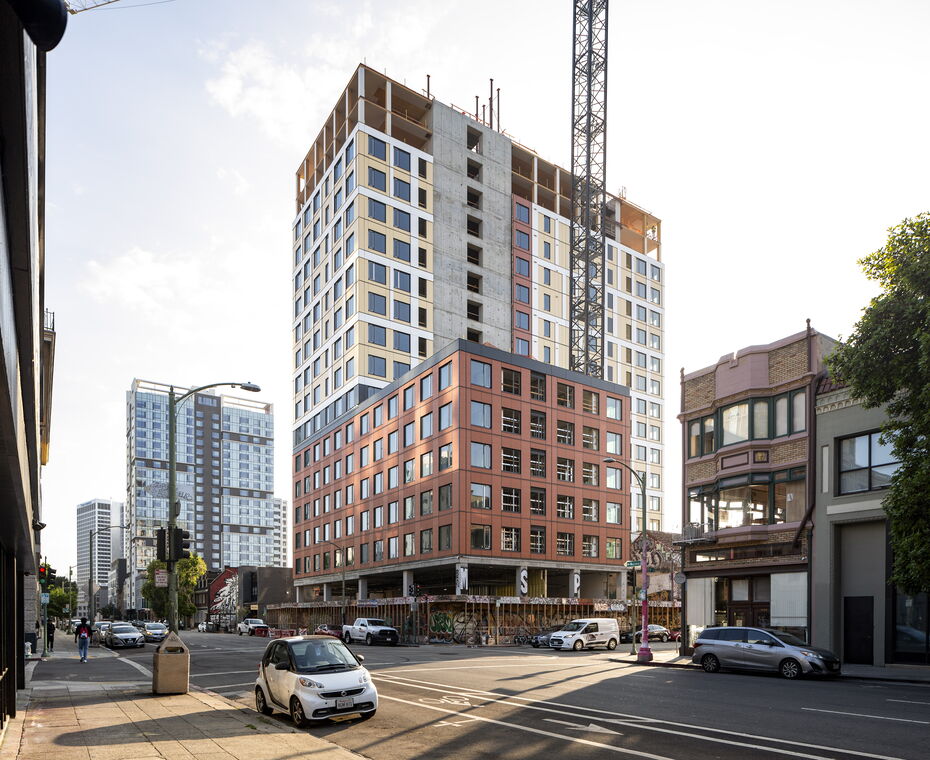
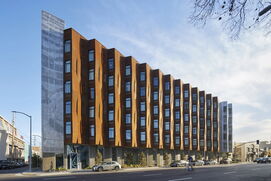
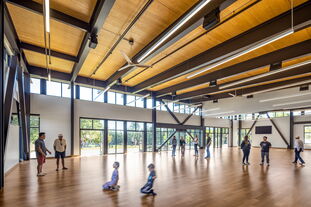
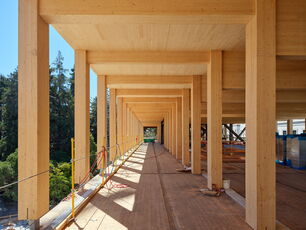
Other innovative construction methods can significantly enhance efficiency and sustainability in multifamily residential developments. Mass timber is a category of advanced engineered wood products where pieces of wood are bonded together to create massive structural panels, columns, and beams. Designed to replace traditional, carbon-heavy framing materials like concrete and steel, it enables the construction of large-scale, mid-rise, and even high-rise buildings. Panelized construction enables walls and floors to be manufactured in factories and assembled on-site, further reducing costs and timelines. 3D printing has the potential to automate labor-intensive components of construction, thus cutting costs for certain housing types.
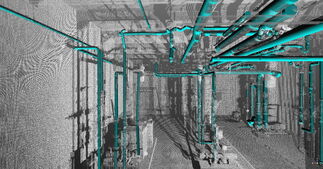
Modern technology can enhance productivity throughout the housing delivery process. Building information modeling (BIM) enables architects and builders to create detailed 3D representations of projects, allowing for an immersive visualization of design elements, materials, and spatial relationships. This technology not only speeds identification of potential problems — such as clashes between structural and mechanical systems — but also facilitates collaboration among stakeholders throughout the construction process. By addressing problems at the design stage rather than during construction, BIM significantly reduces delays and unexpected costs, ultimately leading to substantial cost savings and more efficient project delivery.
Similarly, artificial intelligence offers opportunities to identify compliance issues sooner, allowing planning departments to focus on complex challenges rather than on repetitive checks.
All these innovative construction technologies could create a whole new cost-efficient housing delivery ecosystem — if California can eliminate roadblocks to their adoption.
The Select Committee on Housing Construction Innovation, led by Assemblymember Buffy Wicks, has been instrumental in driving legislative reforms to modernize housing construction in California. The committee’s work
revealed that 258 factory-built housing manufacturers are producing housing for California, and almost half of them are based in the state. Yet, factory-built housing accounts for less than 5% of new residential construction in California, according to a report by the Terner Center for Housing Innovation. The reason? The state’s current housing delivery system is largely based on a traditional site-built model. Consequently, factory-built housing faces many hurdles, including duplicative reviews, inconsistent code interpretations, unpredictable permitting processes, and financing structures that undermine its efficiency. The California Strategic Growth Council noted that these regulatory hurdles create a fragmented demand system, creating uncertain timelines and pipeline bottlenecks for the residential development industry. A variety of reforms could help remove these obstacles from the
current delivery system, enabling innovative construction methods to scale. These reforms include greater consistency in building code interpretation, state-approved standardized plans for factory-built and modular housing, streamlined inspections (which would decrease timelines and costs for both traditional and modern construction), and loan products for factory-built housing. Additionally, proposed reforms would provide state-backed risk reduction for the factory-built housing industry through credit backstops for construction bonds, insurance guarantees, and regional pilot programs that standardize processes and consolidate demand to attract private investment in prefabricated housing. These reforms are reflected in a package of six bills aimed at reducing housing construction costs by greenlighting construction methods that can produce housing more quickly, more affordably, and in a more environmentally friendly manner:
Assembly Bill 306 (Schultz and Hadwick): Establishes a statewide appeals process for building code interpretations.
Assembly Bill 1815 (Wicks): Bans local jurisdictions from imposing stricter standards on factory-built housing.
Assembly Bill 2012 (Hoover): Lowers transportation costs for factory-built housing.
Assembly Bill 2058 (Harabedian): Offers flexibility in using statewide building inspectors for factory projects.
Assembly Bill 2166 (Carrillo): Creates state-backed credit to support multifamily projects.
Assembly Bill 2185 (Quirk-Silva): Alters state funding programs for factory-built housing projects.
In addition to these legislative efforts, a movement to modernize the building code is gaining traction. Single-stair codes allow small apartment buildings above three stories to have one staircase. Most North American codes require two stairways for fire evacuation, a mandate that persists even after fire sprinklers became standard in new construction. Because multiple stairways and corridors eat up so much space, four- to six-story buildings often aren’t architecturally or financially viable. Single stair buildings free up that space, fitting tight or irregular infill lots, cutting construction costs by roughly 6% to 13% and yielding larger, better-lit units well suited to family-sized housing. This has long been the standard in Seattle, New York, and much of the world outside North America, and the approach is spreading fast: since 2022, 19 states and Washington, D.C., have introduced or passed legislation related to allowing single stair buildings. Culver City recently became the first city in California to legalize single-stair apartments up to six stories, pairing relaxed stair requirements with modern safety measures such as sprinklers, fire-rated stair enclosures, and short exit distances. SPUR is supporting efforts in San Francisco and the California Legislature to promote single stair codes for infill housing through legislative advocacy, research on international best practices, and public engagement. Policymakers are looking at yet other ways to modernize housing design, review, and construction. One is remote inspections. SPUR-sponsored Assembly Bill 1738 would allow eligible construction inspections to be conducted virtually as part of an effort to modernize permitting processes. Remote inspections can save money by shortening timelines and freeing inspector capacity.
With federal resources dwindling, California can’t rely solely on securing new subsidies; it must learn to build differently, more predictably, and at lower cost. Modular construction, mass timber, and other technologies aim to maximize housing value. But they cannot scale without legislative reforms that streamline local building codes and modernize funding streams to lower the risks associated with industrialized construction.