Today, Oakland Mayor Barbara Lee’s Working Group on Charter Reform has released its final report examining how the city’s charter can help better define the roles of elected officials, address responsible city financial planning, and improve government accountability and transparency. The working group found that Oakland’s current charter creates a unique system that merges council-manager and strong-mayor forms of governments, resulting in confusion about authority, undermined accountability, and operational inefficiencies. Residents consistently expressed frustration that the mayor lacks sufficient power to deliver on campaign promises, while the City Council struggles to provide effective oversight without clear lines of responsibility. This misalignment particularly harms residents with fewer resources to navigate the fragmented system and contributes to Oakland’s severe fiscal challenges and persistent inequities.
The working group:
1. Calls for Oakland to choose one coherent governance model — either a strong mayor system or a council-manager system — to eliminate structural ambiguity;
2. Specifically advocates adopting a strong-mayor system where the mayor serves as chief executive with veto power over legislation and budgets while retaining a city administrator to oversee core internal functions like finance, HR, and IT; and
3. Proposes strengthening the City Council’s legislative capacity by establishing an independent budget and legislative analyst office, clarifying oversight authority including subpoena powers, reducing the council to seven district members (phasing out the at-large seat), and making council service explicitly full-time with appropriate compensation.
A Collaborative Process Rooted in Community Voice
When Mayor Lee convened the Charter Reform Working Group in 2025, she asked the League of Women Voters of Oakland and SPUR to co-facilitate its process. We were honored to take on this role, bringing our experience in policy research, education, and community engagement to support a truly participatory effort.
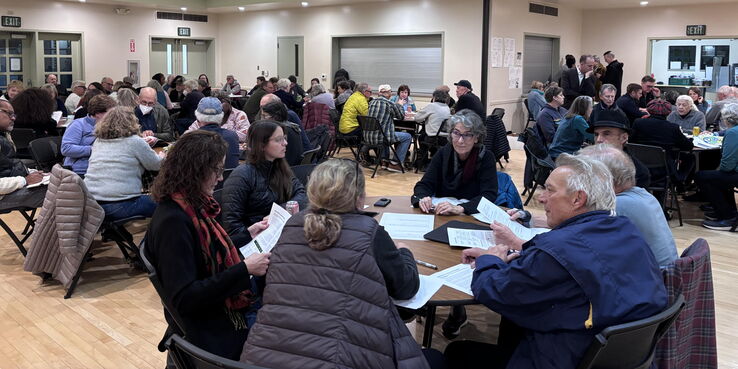
Over the fall of 2025, the working group engaged more than 750 Oakland residents through public meetings and listening sessions across the city. The League of Women Voters Oakland and SPUR conducted more than 60 interviews with current and former city officials, staff, and subject-matter experts and shared the insights with the working group, and an additional 433 people responded to a community survey. The effort helped the working group better understand what Oaklanders want from their government and what structural changes could help deliver it.
What’s Next: The Road to the Ballot
Oakland faces extraordinary challenges, including a severe structural budget deficit, persistent inequities across neighborhoods, and strained confidence in city government among residents. Charter reform alone won’t solve these problems, but as the working group’s report notes, it can “create the conditions that make solutions possible by clarifying who is responsible, aligning authority with accountability, and ensuring that, when change is necessary, the path forward is clear.”
That clarity is what Oakland needs right now. We’re grateful to have played a role in this important work, and we look forward to continuing the conversation as Oakland charts its path forward.
With the publication of its final report, the working group has fulfilled its charge. Mayor Lee and the City Council will determine which of its recommendations to place on the ballot for Oakland voters to consider. SPUR remains committed to supporting future conversations and education with clear analysis, accessible data, and a focus on how governance structures can advance equity and effectiveness.