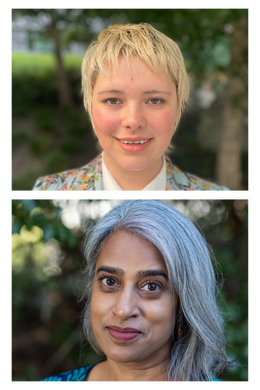
Downtown San José is a walkable, transit-rich, and culturally dynamic urban center. But in the wake of the COVID-19 pandemic, it’s still grappling with long-term low daytime foot traffic and high vacancies in office and commercial buildings. A new policy brief from SPUR suggests that filling empty ground-floor spaces is a critical first step in a long-term economic revitalization strategy. In Getting In on the Ground Floor: Activation strategies for downtown San José, Housing and Planning Policy Manager Erika McLitus and Chief Policy Officer Sujata Srivastava describe five strategies to capitalize on the opportunity these spaces offer for local artists, nonprofit organizations, and small businesses. We asked them about how SPUR’s recommended policy changes can both support local artists and entrepreneurs and bring new energy to downtown.
You argue that San José can use ground-floor spaces to create a virtuous circle of activation and development. How?
Downtown areas that have long-term commercial vacancies, especially on the ground floor, and low daytime foot traffic can feel less safe and inviting. These effects are compounding: people are less likely to linger or explore, which means local businesses do not benefit from spontaneous visits. San José can break these negative patterns by activating empty ground-floor spaces and improving the pedestrian experience to draw more visitors and breathe new life into local businesses.
Our research shows that vacant ground-floor spaces are an opportunity to reinvent downtown — and not just as a hub for small businesses. These spaces can also be ideal for unconventional tenants, such as artists, to help create lively, mixed-use districts that feel inviting and that encourage more people to spend time downtown. Once you have more activity, it’s easier to attract more tenants on the upper floors, generating revenue that can be reinvested in the public realm and public services in a virtuous cycle of investment and economic activity.
What lessons can San José learn from other cities that have revitalized their downtowns?
Other large U.S. cities, including Boston, Cleveland, Denver, and Philadelphia, have invested in creative placemaking initiatives that celebrate and leverage local cultural assets to attract visitors and boost economic activity in struggling neighborhoods. SPUR explored these initiatives in a policy brief, Culture as Catalyst: How arts and culture districts can revitalize downtowns.
These and other cities offer strategies and best practices to inform San José’s revitalization efforts, from engaging the arts community in planning to forging effective public-private partnerships to support downtown revitalization.
You did some location-specific research to identify commercial vacancy issues. What did you learn?
We focused on a historic district bounded by E. Santa Clara Street, S. 2nd Street, Paseo de San Antonio, and S. 1st Street. This area is well connected to transit and key destinations, but it’s struggling with high commercial ground-floor vacancies. Before we could make recommendations about how to fill the spaces, we needed to learn why they are not being used more fully.
Not every vacant space is alike. The study area has what we call “stuck sites” — locations where planned development projects have stalled. It has second-generation spaces — historic buildings that often require costly upgrades to make them attractive to lease. And it has inactive or limited-hours spaces — tenanted spaces that are either inactive or open only in the evenings, so no daytime foot traffic.
Our findings suggest that most long-term vacancies reflect systemic challenges faced by property owners and small businesses, not a lack of interest in signing new commercial leases in downtown San José. Many property owners are hesitant to invest in improvements without guaranteed tenants, while small businesses often struggle to afford market-rate rents. These challenges contribute to a cycle of vacancy and underutilization. The way to address them is to remove leasing barriers and create leasing incentives for property owners and prospective tenants.
What are the biggest challenges for owners?
Property owners face three issues. First, many of them have not adjusted their rent expectations to reflect current economic conditions. Before the pandemic, downtown spaces were often occupied by large businesses and national chains on long-term leases. However, the economic downturn and the rise of online shopping have disrupted these patterns, leading to a decline in physical storefronts.
Second, several planned development projects have stalled due to market and financing challenges, leaving some properties vacant.
Third, many vacant second-generation spaces require costly upgrades to attract new tenants. Upgrading historic properties can be particularly challenging due to their scale and the bureaucratic reviews involved. Interviews with city staff reveal that most landlords want to fill vacancies but some, particularly “mom-and-pop” landlords, may lack the knowledge and resources to upgrade their buildings and attract tenants. These property owners may need technical assistance navigating the permitting process or help finding suitable tenants.
And what issues are small business owners grappling with?
Despite high vacancy rates, market-rate rents can be prohibitively expensive for startups and small businesses and artists and community organizations. Those who secure leases often still face significant financial challenges, including costly tenant improvements and permit-related administrative costs or delays.
What role can the City of San José play to help overcome these challenges?
San José has several promising programs that support property owners, small businesses, and ground-floor activation, such as the Small Business Ally initiative, the Streamlined Restaurants program, MOMENT, and the Storefront Activation Grant program. The city should consider doubling down on these programs by expanding their scope and funding. Scaling them to the district level can help create a more cohesive and vibrant arts scene while providing essential support to small businesses, allowing them to thrive downtown.
We also think new programs could help fill gaps and address barriers that existing programs don’t. An “arts ally” program could help connect arts and culture organizations with property owners interested in temporary installations or other ground-floor activation treatments, provide technical assistance with permitting, and contribute funding to execute these ideas and treatments.
Getting leases signed is a big challenge, but not the only one. Urban design changes are also needed. What kinds of public realm challenges did your research turn up?
Most streets in downtown San José reflect auto-oriented development patterns. Streets designed to accommodate cars reduce foot traffic between neighborhoods, and pedestrian connections between popular destinations are inadequate or may not be intuitive for visitors. City leadership is exploring public realm treatments to help “stitch” downtown districts together, making it easier for residents and visitors to move between attractions. It should also create public gathering spaces in downtown. These spaces encourage visitors to linger, to explore.
What strategies can San José employ to activate downtown San José’s vacant and underutilized ground-floor spaces?
SPUR identified five strategies to capitalize on the “ground-floor” opportunity:
- Expand the capacity of effective city programs for permitting, placemaking, and public realm improvements by adding staff and funding or by broadening eligibility criteria for program participants.
- Use incentives and support services to encourage property owners to keep vacant properties in good condition and to find new tenants. Penalize bad actors judiciously.
- Streamline city processes and provide technical support for property owners, small businesses, and arts organizations to help them lease vacant or underutilized ground-floor spaces.
- Invest in public realm improvements that make it easier and more pleasant for pedestrians to move through and between downtown neighborhoods.
- Partner with local artists and cultural organizations to develop and implement a comprehensive cultural planning strategy.
Our brief outlines 13 recommendations for implementing these strategies. Because many of them are near-term recommendations that don’t hinge on general economic conditions and other factors that will shape the broader transformation of San José’s downtown, they could quickly improve conditions for residents, visitors, employees, small business owners, artists, and all San Joséans.