The housing affordability crisis in the Bay Area and across the nation is worsening. In San José, the median home price is $1.9 million, a cost that requires a minimum household income of at least $500,000 to afford. The city’s elementary school teachers earn roughly $92,000. The headline here is that the people who power the region’s schools and local economy cannot afford to live in the communities they serve. That’s why a task force review of the city’s General Plan aims to create a framework to incentivize so-called “missing middle” housing — small-scale multifamily homes like duplexes, fourplexes, and courtyard apartments.
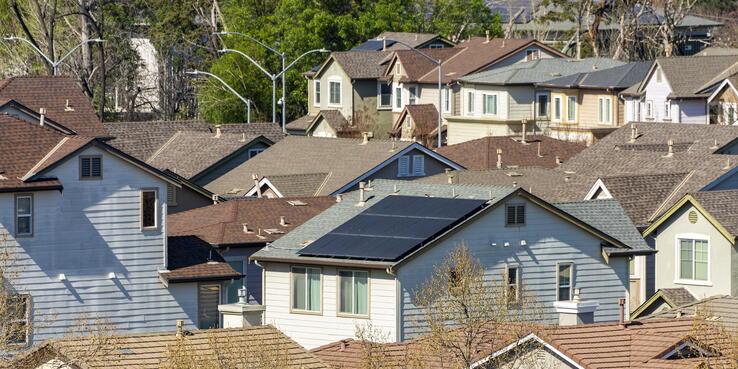
The affordability crisis is not unique to San José. Throughout the Bay Area, housing scarcity has driven prices beyond the reach of most people, depriving communities of the essential workforce that propels them. One of the culprits is zoning: most of California’s residential land consists of detached single-family homes, the most expensive form of housing. In the Bay Area, 85% of residential land is zoned this way, which means relying solely on dramatic price reductions or subsidies to address the affordability crisis won’t work. The Bay Area must change what it allows to be built.
Missing-middle housing — duplexes, triplexes, fourplexes, or courtyard apartments — is indispensable. It expands the range of attainable homeownership and rental options while making more efficient use of the land. Increasing supply — especially in high-opportunity neighborhoods, affluent residential areas with access to good schools and other tools for building wealth —eases pressure across the market for all income levels.
Although housing costs are a national issue, they are particularly acute in California. The state’s home prices are more than double the American average and have increased significantly over the past decade. In 2015, the median price of a single-family home in Santa Clara County was roughly $815,000. By 2025, it had climbed to more than $2 million. In San José, the average two-bedroom rent is $3,000 a month.
Today, only 15% of California residents can afford a single-family home. Close to 70% of the state’s low-income renters, nearly half of middle-income renters, and roughly 40% to 50% of lower- and middle-income homeowners are cost-burdened. Housing costs in our state have dramatically outpaced incomes. San José, where the median individual income is approximately $66,000, has become one of the least affordable places to live in the United States and the world.
By reserving most of California’s residential land solely for single-family homes, the state’s cities and towns have effectively claimed it for upper-income households. Detached single-family homes serve an important role, but when they are the default, they restrict more attainable ownership and rental options. Although state legislation in 2021 allowed lot subdivision and the construction of two homes on a single lot, uptake has been extremely modest. Income patterns reinforce this dynamic as well. In San José, households living in detached single-family homes earn $232,000, compared with $108,000 for households living in 3- to 19-unit buildings, a $124,000 gap. Given that the city’s median household income is approximately $146,000, expanding missing-middle housing options would better align with residents’ and workers’ incomes.
Missing-middle housing lowers per-unit costs for a simple reason: land is expensive. When zoning allows only one detached home per parcel, one household or owner absorbs the full cost of that land. By contrast, duplexes, triplexes, and fourplexes can spread those costs out more evenly among households. Smaller unit sizes and shared infrastructure and utilities can further lower construction costs.
In 2021, the City of Portland began to allow a broader range of missing-middle housing in neighborhoods across the city through its Residential Infill Project. A 2025 analysis of the program found that newly built missing-middle housing sold for $250,000 to $300,000 less than new single-family homes. While missing-middle housing alone can’t immediately enable low-income families to afford homes, it can materially reduce prices, expand access to homeownership for middle-income households, and spark migration chains that can free up older, less expensive housing for other residents.
These findings reflect the overwhelming body of academic research that shows that restrictive zoning increases housing prices. One 2021 study of San Francisco found that new housing built near existing buildings reduced nearby rents by 2% and lowered the risk of displacement to lower-income neighborhoods by 17%. Boosting housing supply and diversifying available housing types can also provide more ownership opportunities to lower-income or younger home buyers.
Subsidized affordable housing remains essential, but it cannot be the sole solution. Public funding is extremely limited and insufficient to meet the scale of the need. Santa Clara County’s nearly exhausted $950 million Measure A bond has successfully built or preserved more than 6,000 affordable homes. Yet San José alone still needs to create more than 24,000 extremely low-, very low-, and low-income homes and more than 10,000 moderate-income homes, according to the city’s Housing Element. Middle-income households generally earn too much to qualify for affordable subsidized housing but far too little to afford a $2 million home. Because there is not enough deeply subsidized affordable housing or funding to meet the needs of lower-income households, many lower-income residents already live in unsubsidized housing. That’s why market-rate homes must be part of any solution to close the affordability gap. Without creating more moderately priced market-rate homes, cities leave a vast gap between deeply subsidized housing and high-priced single-family homes. Missing-middle housing helps close that gap.
Skeptics sometimes argue that missing-middle housing can’t meaningfully improve affordability at scale, but incremental growth matters. California’s affordability crisis is the result of decades of housing underproduction. Reversing it will require a steady increase in the variety of housing types. If the Bay Area continues to reject modest increases in density, rents and home prices will remain high, and displacement will continue. Over time, the addition of thousands of smaller-scale missing-middle homes can meaningfully expand supply, reduce housing costs, and improve mobility within the market. If cities reject missing-middle housing as a housing option, especially in high-opportunity neighborhoods, they are willfully choosing to preserve scarcity, unaffordability, and economic and racial segregation. They can instead choose to plan housing in a thoughtful way that better meets community needs.
As San José analyzes its General Plan, it will no doubt consider how zoning changes could mitigate its housing affordability crisis, bringing teachers, public safety employees, and others closer to jobs and creating neighborhoods where people can thrive. Adding more small-scale missing-middle homes would represent a huge step in the right direction. SPUR looks forward to learning how the city plans to make it easier to build them.